Updated 04-March-2026
A-Level exams are a major milestone for students across the UK. From preparing intensively in the months beforehand to finally sitting the exams and receiving results, knowing the key dates in advance helps families plan effectively and students stay confident.
Whether you are in school, studying independently, or preparing as a private candidate, having a clear timeline for 2026 ensures that revision and logistics fall into place without last-minute stress.
This guide explains the major A-Level exam windows, contingency arrangements, results day, and what comes next — in a simple and clear way suited for students and parents alike.
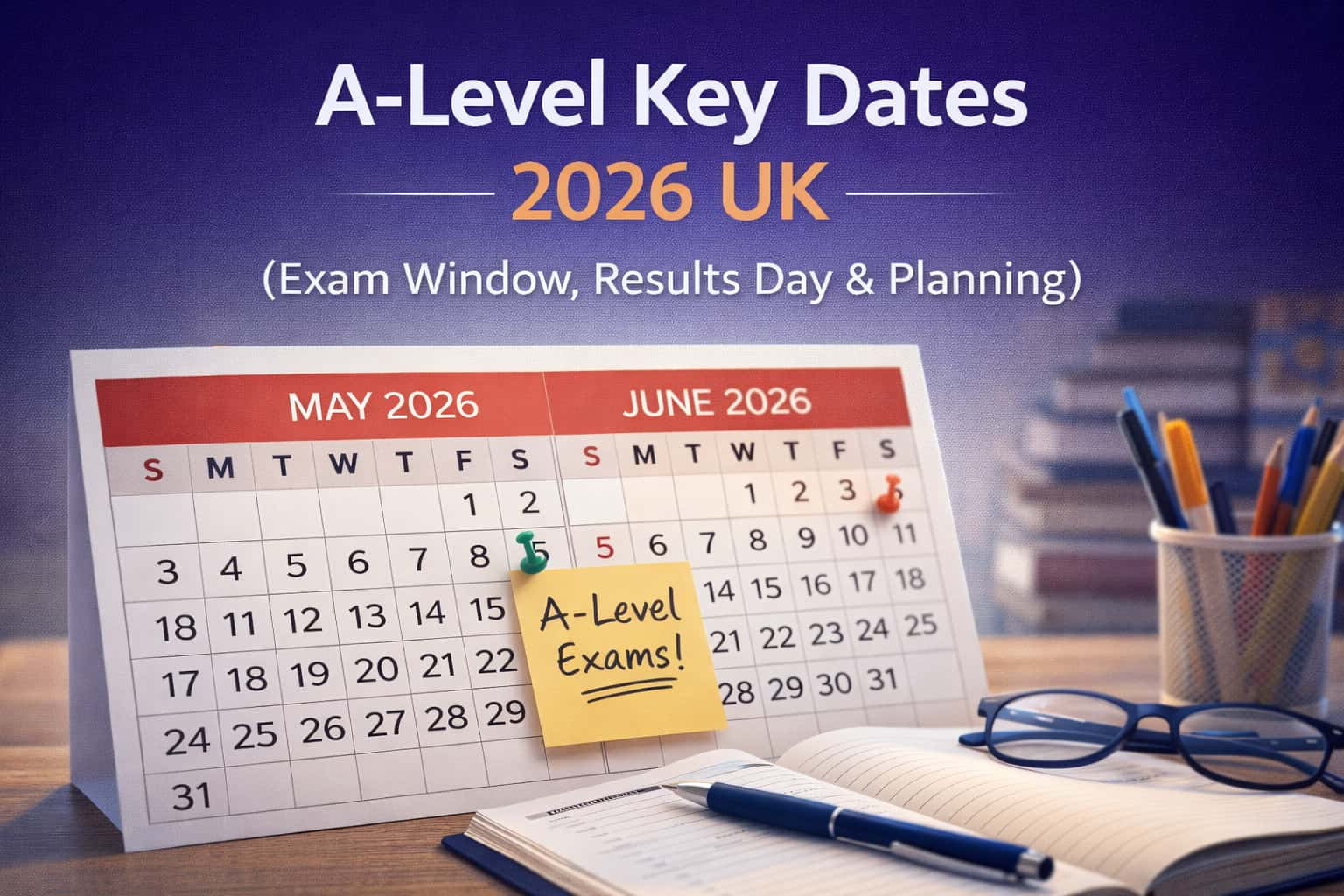
A-Level exams in the UK generally take place in the spring and early summer. Most written exams are scheduled from May to June 2026. However, exact dates vary by exam board and subject.
The main advantage of understanding the key dates early is that you can plan your revision, mock exams, and personal life in a way that avoids clashes and anxiety. Instead of guessing when your exams might be, you can work backwards from the timetable and set realistic goals for study and practice each week.
Typically, departments and schools will issue personalised timetables to students based on their entries, but the national A-Level exam window gives a broad framework within which all boards operate.
Across major UK exam boards — including AQA, Pearson Edexcel, OCR, and WJEC/Eduqas — schools and centres expect A-Level exams to start in May 2026 and continue through June 2026.
This period includes most written papers, practical assessments where applicable, and controlled assessments depending on the subject. Students should receive their individual timetables from their schools or centres by early spring.
Planning revision with the national window in mind helps students focus time on subjects that appear earlier in the calendar and adjust study loads accordingly.
Exams are designed to run within set windows, but boards also designate contingency days. These are held in reserve in case major nationwide events — such as prolonged industrial action, system outages, severe weather, or national emergencies — disrupt scheduled dates.
A contingency date in the exam calendar is not a day you should expect to sit a paper, but it is one you should avoid booking travel, appointments, or major commitments on. In 2026, contingency arrangements typically fall toward the end of the exam period in June.
Being aware of these days means students and parents avoid surprises and can manage logistics around the likelihood of last-minute adjustments.
One of the most anticipated days for students is Results Day. In 2026, A-Level results are expected to be released in mid-August, historically on a Tuesday or Thursday morning.
Results Day is a checkpoint rather than a culmination. It is the moment when students confirm university offers, make decisions about clearing, apply for resits if necessary, and begin their next phase — whether sixth form, college, apprenticeships, or employment.
Most schools and centres open for results collection early in the day, and online results become visible at set times provided by the exam boards. Planning ahead for how results will be accessed helps families avoid confusion on the big day.
If you are studying independently and entering A-Level exams as a private candidate, knowing the key dates is even more critical. Private candidates must ensure they register with an approved centre well before deadlines, understand their own timetable, and confirm when and how results will be released.
Unlike school students who receive personalised timetables directly, private candidates should check their entries and exam dates with their chosen centre to avoid miscommunication. The national A-Level exam window remains a useful framework, but individual entries determine specific booking and attendance requirements.
Once you know the broad exam window, the next step is to build a revision plan around it.
Start by listing the subjects that are scheduled earlier in the calendar. These should be the focus of revision in the early months of the year. As you progress through spring, shift your study time toward later exams and re-practice weaker topics.
Using real past papers and official mark schemes supports performance under timed conditions and helps build confidence. A structured timeline means students aren’t trying to revise everything at once or leaving challenging topics to the final weeks.
Understanding A-Level key dates for 2026 not only supports better revision planning but also reduces stress and uncertainty. When students know what to expect and when to expect it, they can study with purpose, allocate time logically, and manage other responsibilities without last-minute panic.
Planning doesn’t eliminate challenges, but it does give students and families control over the process — and that control often translates into improved performance and confidence.
If you’re planning ahead for 2026, the following guides will help you stay fully prepared:
A-Level Physics Past Papers (All Boards)
Access subject-specific past papers and mark schemes to support structured revision and exam technique practice.
👉 https://meritstudyresources.co.uk/past-papers/a-levels/physics
A-Level Exam Stress Management:
👉 https://merittutors.co.uk/details/A-Level-Exam-Stress-Management-2026-Guide-Stay-Calm-Focused-Confident/102
Recent Posts
Categories
Tags